
 Factory Automation
 Logistics Automation
 Process Automation
 Crane Collision Avoidance
 LiDAR Sensors
 Safety Laser Scanners
 Optical Data Transmission
 Hot Metal Detectors
 Laser Distance Sensor
 Blog
Blog Whitepapers
 Case Studies
 Infographics
In semiconductor manufacturing, the term "high stakes" barely captures the level of precision required. When handling wafers worth tens of thousands of dollars, every movement must be controlled, accurate, and—most importantly—safe. A single dropped Front Opening Unified Pod (FOUP) doesn't just result in lost material; it can lead to costly downtime, potential equipment damage, and a significant impact on production yield.
To help prevent these scenarios, semiconductor facilities rely on a sophisticated "handshake" between automated material handling systems and process equipment. This communication is governed by the SEMI E84 standard, which enables safe and reliable transfer of FOUPs throughout the fab.
At Hokuyo, we have spent decades developing optical sensing technologies that support this critical communication process.
Let's explore how SEMI E84 and optical data transmission help keep modern semiconductor manufacturing facilities operating safely, efficiently, and reliably.
What is the SEMI E84 Standard?
At its core, SEMI E84 is the Specification for Enhanced Carrier Handoff Parallel I/O Interface. While the name may sound complex, its purpose is straightforward: it defines the parallel I/O (PIO) communication used during the automated transfer of carriers between an Automated Material Handling System (AMHS) and semiconductor manufacturing equipment.
In a typical semiconductor facility, two primary systems participate in this exchange:
- Active Equipment:
Typically an Overhead Hoist Transport (OHT), Automated Guided Vehicle (AGV), or Overhead Shuttle (OHS) responsible for transporting carriers throughout the facility. - Passive Equipment:
The receiving equipment, such as a load port, stocker, or FOUP handling system.
For a transfer to occur safely and efficiently, both systems must exchange status information in real time. They need to confirm that the carrier is correctly positioned, the receiving equipment is ready, and the transfer process can proceed as intended.
The SEMI E84 standard defines the signal sequences, communication requirements, and timing relationships that govern this interaction. By establishing a common communication framework, SEMI E84 helps enable interoperability between equipment from different manufacturers throughout the semiconductor manufacturing environment.
The Physical Link: Spotlight on Hokuyo’s DMS Series
While SEMI E84 defines the communication protocol and signal sequences used during carrier handoff, a reliable method is still needed to transmit those signals between moving and stationary equipment. In semiconductor manufacturing environments, this communication must occur without physical contact to support automated material transfers.
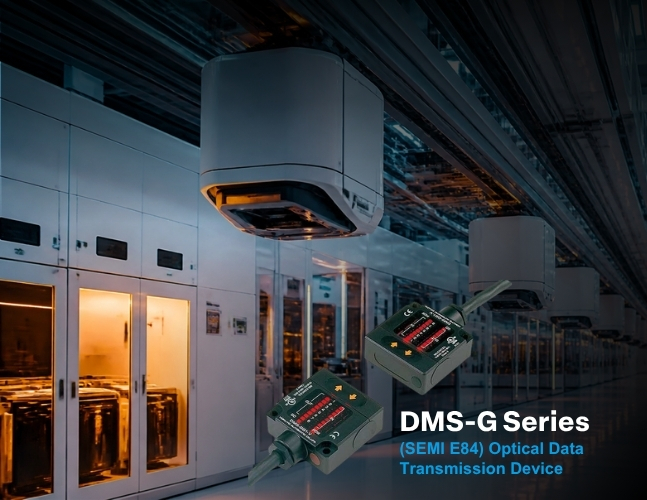
This is where optical data transmission plays a critical role. Hokuyo's DMS Series optical data transmission devices are designed to support the parallel I/O communication requirements used in SEMI E84 applications.
DMG and DMJ Series
The DMG and DMJ series are 8-bit parallel optical data transmission devices developed for semiconductor material handling applications. These systems provide a contactless communication link between Automated Material Handling Systems (AMHS) and process equipment.
- How They Work:
One transceiver is installed on the vehicle side (active equipment), while a corresponding transceiver is installed on the equipment side (passive equipment). When properly aligned, the devices exchange the parallel I/O signals required for the carrier transfer process using infrared light. - Supporting the E84 Handshake:
This optical communication link allows equipment to exchange critical status signals throughout the transfer sequence, helping verify equipment readiness and supporting proper carrier handoff procedures.
By utilizing optical data transmission technology, semiconductor manufacturers can support reliable, contactless communication between automated transport systems and production equipment while maintaining compliance with SEMI E84 communication requirements.
Why Optical Communication Wins in the Cleanroom
Optical data transmission is widely used in semiconductor material handling applications because it provides reliable, contactless communication between moving and stationary equipment. Compared to traditional mechanical communication methods, optical systems offer several advantages for automated manufacturing environments.
-
Reliable Communication in Electrically Noisy Environments
Semiconductor facilities contain a wide range of equipment, power systems, and automation technologies. Because optical data transmission uses infrared light rather than electrical contact points, it is not affected by electromagnetic noise in the same way as many conventional electrical communication methods.
This helps support consistent communication between automated transport systems and production equipment throughout the carrier transfer process. -
Supporting Contactless Operation
Moving equipment such as OHT systems requires reliable communication while continuously traveling throughout the facility. Traditional mechanical communication methods can be subject to wear over time due to repeated motion and physical contact.
Optical data transmission provides a contactless communication solution that eliminates communication contact points between moving and stationary equipment. By removing these mechanical interfaces, manufacturers can reduce maintenance requirements while supporting the cleanliness standards required in semiconductor production environments. -
Fast, Reliable Signal Exchange
Automated material handling systems depend on timely communication during carrier transfers. Optical data transmission enables the rapid exchange of status signals required for SEMI E84 communication sequences, helping support efficient material movement throughout the facility.
By providing reliable, contactless communication between active and passive equipment, optical data transmission plays an important role in supporting safe and efficient semiconductor manufacturing operations.
The Impact on Efficiency: From Insight to Impact
In semiconductor manufacturing, maintaining reliable communication between automated transport systems and production equipment is critical to efficient material handling. Communication interruptions during carrier transfers can result in process delays, reduced equipment utilization, and additional troubleshooting requirements.
By utilizing reliable optical data transmission technologies such as the Hokuyo DMS-G Series, semiconductor manufacturers can support consistent SEMI E84 communication throughout the carrier handoff process.
Benefits of reliable optical communication include:
- Supporting Reliable Carrier Transfers
Consistent signal exchange helps support proper communication between active and passive equipment during automated handoff operations. - Improving Operational Efficiency
Reliable communication can help reduce transfer interruptions and support efficient material movement throughout the facility. - Reducing Maintenance Requirements
Contactless optical communication eliminates mechanical communication contact points that can wear over time, helping support long-term system reliability.
In high-volume semiconductor manufacturing environments, reliable communication is an essential component of maintaining efficient automated material handling operations.
The Holistic Fab: Integrating LiDAR and AGV Sensors
While the SEMI E84 handshake plays a critical role in automated carrier transfers, it is only one component of a modern semiconductor automation environment. Automated transport systems must also move materials safely and efficiently throughout the facility.
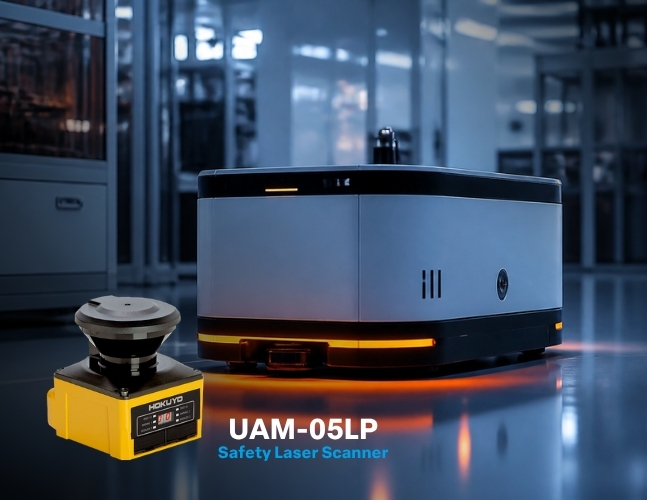
This is where complementary sensing technologies help support mobile automation applications. Hokuyo's UST Series 2D LiDAR sensors are commonly used for obstacle detection and environmental awareness in AGV and AMR systems, while the UAM Series Safety Laser Scanners help support personnel protection in shared workspaces.
Together, these technologies provide the environmental data needed to support safe navigation, obstacle detection, and automated material handling throughout semiconductor manufacturing facilities.
By combining SEMI E84-compliant optical data transmission with advanced sensing technologies, manufacturers can support reliable communication, improved operational awareness, and efficient material movement across automated production environments.
Conclusion: The Future of Semiconductor Automation
As demand for semiconductors continues to grow, manufacturing environments are becoming increasingly automated and complex. Supporting efficient material movement, reliable communication, and safe equipment operation requires automation technologies that can perform consistently across demanding production environments.
At Hokuyo, we are committed to helping semiconductor manufacturers implement reliable sensing and communication solutions. From the DMS Series, which supports the optical communication requirements of SEMI E84 applications, to advanced LiDAR and safety sensing technologies that support automated material handling, our solutions are designed to help facilities operate more efficiently and reliably.
Whether you are upgrading an existing material handling system or designing a new automation deployment, our team can help identify the right optical data transmission solution for your application.
Have questions about SEMI E84 communication requirements or optical data transmission technologies? Contact Hokuyo USA today to connect with one of our application specialists.