
 Factory Automation
 Logistics Automation
 Process Automation
 Crane Collision Avoidance
 LiDAR Sensors
 Safety Laser Scanners
 Optical Data Transmission
 Hot Metal Detectors
 Laser Distance Sensor
 Blog
Blog Whitepapers
 Case Studies
 Infographics
Long-range distance measurement with millimeter accuracy.
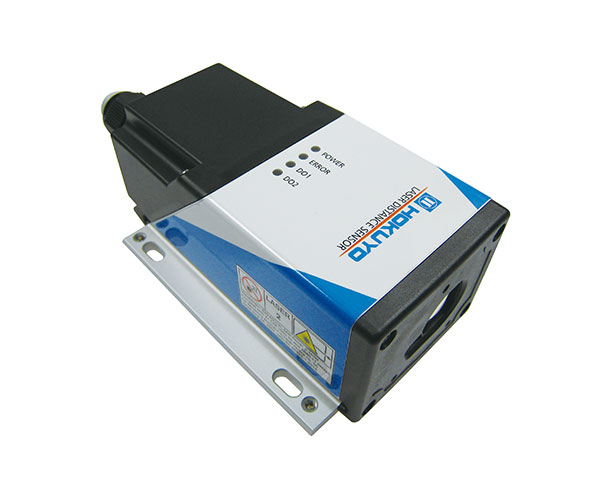
When your industrial project requires accurate indoor or outdoor measurement, Hokuyo's laser distance sensors deliver reliable, non-contact performance. Designed for collision avoidance and positioning applications, these sensors provide precise distance measurements for liquids, reflectors, and natural surfaces. Equipped with two digital outputs, they are also ideal as positioning sensors for logistics automation, supporting AGVs, material handling systems, automated equipment, and other industrial applications. Explore our available products below or contact us today to learn more about Hokuyo's advanced sensor technologies and how they can improve the efficiency and safety of your operations.
Laser Distance Sensor FAQs
They’re used across industries for:
- Robotics & automation: Positioning robotic arms with millimeter precision.
- Material handling: Detecting pallet height, spacing on conveyors, or crane positioning.
- Quality control: Dimension verification, thickness measurement, and alignment checks.
- Logistics: Monitoring loading/unloading processes or inventory positioning.
Depending on the model, accuracy can be as fine as ±3.0 mm over ranges up to 180 meters. This makes them ideal for high-precision tasks like component alignment, welding, or assembly.
Single-line sensors: Measure precise distance at one point—perfect for applications requiring pinpoint accuracy (e.g., crane lifting heights).
Area-scanning sensors: Cover wide fields of view, better suited for navigation, mapping, or collision avoidance.
Yes. Advanced models like Hokuyo’s PGL Series are designed to perform reliably on shiny metal, dark rubber, glass, and other challenging surfaces - making them adaptable across industries.
Many sensors are IP65-rated, meaning they resist dust, moisture, and vibration. This ensures consistent performance in warehouses, factories, and outdoor settings.
With output rates up to 100 Hz, they deliver near real-time feedback—critical for high-speed automation lines and robotic applications.
Laser distance sensors can integrate via Ethernet, RS-232, or RS-422, making them easy to connect to PLCs, controllers, and automation systems.
Unlike ultrasonic sensors, laser distance sensors are less affected by noise, temperature, or surface conditions. They provide more consistent results across a variety of materials and environments.
Minimal upkeep is required. Routine cleaning of the optical window ensures accuracy, but they’re designed for long-term, reliable operation with little intervention.