
 Factory Automation
 Logistics Automation
 Process Automation
 Crane Collision Avoidance
 LiDAR Sensors
 Safety Laser Scanners
 Optical Data Transmission
 Hot Metal Detectors
 Laser Distance Sensor
 Blog
Blog Whitepapers
 Case Studies
 Infographics
A 2D LiDAR scanner is a remote sensing technology that uses pulsed laser light to measure ranges to objects within a single horizontal or vertical plane. In the world of industrial automation, these sensors serve as the “eyes” of autonomous vehicles, security systems, and heavy machinery. While indoor applications offer controlled lighting and stable temperatures, outdoor environments present a completely different set of obstacles that can easily compromise a standard sensor’s performance.
Choosing the right outdoor LiDAR sensor requires a deep understanding of how environmental factors interact with laser technology. When you move a robot or crane outside, you are suddenly dealing with unpredictable variables such as blinding sunlight, torrential rain, thick fog, and swirling dust. Selecting a sensor that cannot handle these elements can lead to frequent downtime, safety risks, and expensive hardware failures.
In this guide, we will explore the critical specifications and features you need to consider to ensure your outdoor automation project remains reliable, regardless of what the weather report says.
Understanding the Challenges of Outdoor Environments
Outdoor environments are inherently “noisy” for optical sensors. For instance, sunlight is a significant source of infrared radiation. Because most 2D LiDAR scanners operate using infrared wavelengths, the sun can effectively “blind” a sensor if it is not designed with strong ambient light resistance. This interference often results in data loss or a significant reduction in detection range.
Atmospheric conditions such as rain, snow, and fog also pose major challenges. Water droplets in the air can reflect laser pulses back to the sensor before they reach the intended target. This phenomenon creates “ghost objects,” or false positives, causing an autonomous vehicle to stop abruptly for a rain cloud or a puff of steam.
Furthermore, physical contaminants such as dust, mud, and salt spray can accumulate on the sensor window. In industrial environments like ports or mines, these particles are constant. Without appropriate protective ratings and robust internal filtering logic, a 2D LiDAR sensor may struggle to distinguish between a genuine safety hazard and debris on its own lens.
Prioritizing Environmental Resistance and IP Ratings
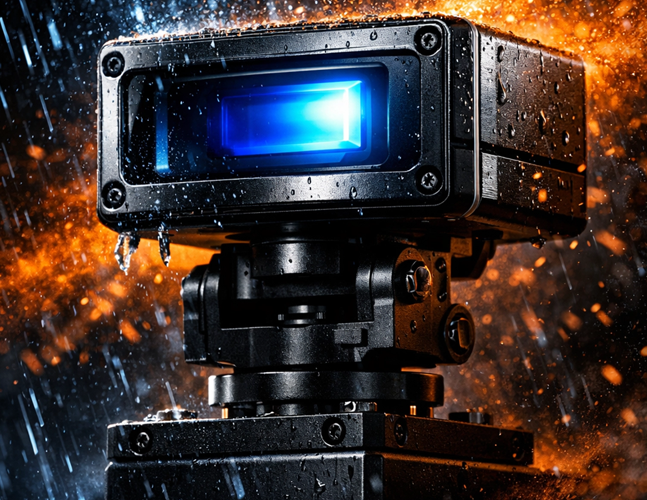
The first specification you should evaluate when selecting an outdoor LiDAR sensor is its Ingress Protection (IP) rating. This rating defines how effectively the device is sealed against solids and liquids. For harsh outdoor applications, an IP67 rating is generally considered the industry standard.
An IP67 rating means the 2D LiDAR scanner is completely dust-tight and can withstand immersion in water up to one meter deep for 30 minutes. This level of protection is essential for equipment that will be pressure-washed or exposed to heavy rain. If your application involves extreme maritime conditions or frequent high-pressure cleaning, you may even consider an IP6K9K rating.
Beyond protection from water and dust, temperature fluctuations can lead to internal condensation or electronic failure. Look for sensors with integrated heaters and a wide operating temperature range — typically from -10°C to +50°C, or broader. A built-in heater prevents frost and fogging on the optical window, ensuring the laser beam remains clear and unobstructed even on freezing mornings.
Leveraging Multi-Echo Technology for Reliability
One of the most important advancements for outdoor 2D LiDAR is multi-echo technology. To understand its value, imagine a laser pulse traveling through a rainstorm. The pulse may strike a raindrop, then another droplet, and finally the intended target, such as a shipping container.
A standard single-echo sensor processes only the first reflection it receives — in this case, the raindrop. This would cause the sensor to report an object just inches away. In contrast, multi-echo sensors capture and analyze multiple reflections from a single pulse. Using advanced signal-processing algorithms, the sensor filters out weaker reflections from rain or fog and prioritizes the strongest or final return from the actual solid object.
This capability significantly reduces false detections and enables continuous operation in inclement weather. When evaluating a reliable outdoor solution, confirming multi-echo functionality is a critical step in maintaining accuracy, safety, and productivity.
Evaluating Ambient Light Resistance
As mentioned earlier, sunlight is a primary challenge for LiDAR sensors. Light intensity is measured in lux, and standard indoor sensors are typically rated for only 10,000 to 15,000 lux. On a bright, clear day, direct sunlight can exceed 100,000 lux.
If you select a 2D LiDAR scanner with insufficient ambient light resistance, system performance may degrade when the sun reaches certain angles. To prevent this, ensure the sensor is rated for 100,000 lux or higher. High-quality outdoor sensors incorporate optical filtering and advanced signal-processing techniques to minimize solar interference, enabling reliable detection of low-reflectivity objects against bright backgrounds.
Detailed technical specifications on how various sensors perform under high-ambient-light conditions are available on our product specifications page.
Balancing Range and Field of View
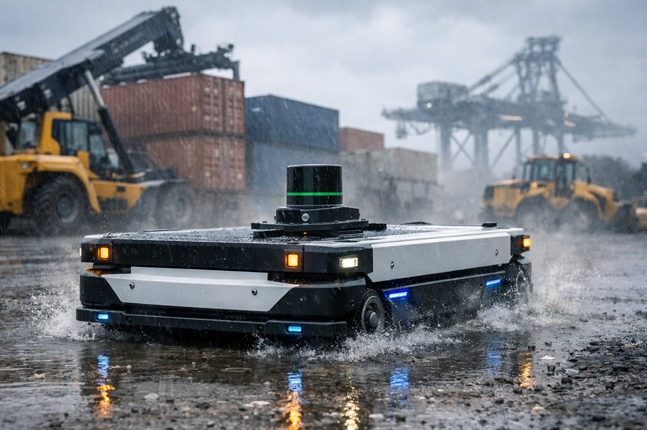
The detection range required depends entirely on the speed and scale of your application. For a small Automated Guided Vehicle (AGV) operating at walking speed, a range of 10 to 20 meters may be sufficient. However, for large-scale port automation or crane collision avoidance, you may require a long-range 2D LiDAR sensor capable of detecting objects at 50 or even 100 meters.
Field of View (FOV) is another critical consideration. Most 2D LiDAR sensors offer a scanning angle between 190° and 270°. A wider FOV, such as 270°, is often preferred because it allows a single sensor to cover three sides of a vehicle, reducing the total number of sensors needed for comprehensive coverage.
Keep in mind that as detection range increases, point density typically decreases at the outer limits. For this reason, always evaluate the sensor’s probability of detection at its maximum rated range — particularly when identifying low-reflectivity objects such as dark clothing or rubber tires.
Common Use Cases for Outdoor 2D LiDAR
The versatility of 2D LiDAR makes it a foundational technology across several industries. Selecting a sensor engineered for harsh environments enables automation in areas once considered too demanding for sensitive electronics.
AGVs and AMRs in Outdoor Logistics
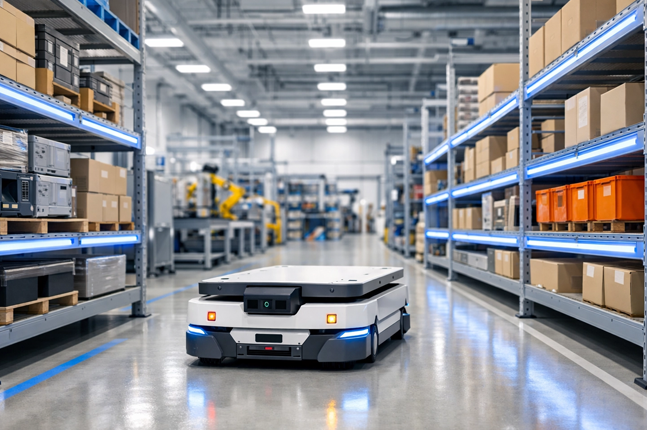
Automated Guided Vehicles (AGVs) and Autonomous Mobile Robots (AMRs) are increasingly operating between warehouses and in open industrial yards. These systems rely on 2D LiDAR for navigation (SLAM) and safety (obstacle detection). In these applications, the sensor must seamlessly transition from low-light indoor environments to bright outdoor sunlight without performance degradation.
Crane Collision Avoidance
At shipping ports and construction sites, large cranes move heavy loads in close proximity to other equipment and personnel. Outdoor-rated LiDAR sensors establish configurable “virtual safety zones” around machinery. If another crane or an individual enters a warning zone, the system can automatically slow or stop movement to prevent a serious incident.
Security and Perimeter Monitoring
2D LiDAR is highly effective for security applications because it operates independently of ambient light, unlike traditional camera systems. It can be mounted horizontally to create a “laser fence” or vertically to monitor building facades. By delivering precise distance measurements, LiDAR systems can differentiate between a human intruder and small animals, significantly reducing false alarms.
Integrating Sensors into Your Workflow
Once you have identified a sensor with the appropriate specifications, the next step is integration. Most modern 2D LiDAR scanner models offer Ethernet connectivity and support standard protocols such as ROS (Robot Operating System), which streamlines development and deployment for engineering teams.
For safety-critical applications, it is also essential to determine whether you require a safety-rated LiDAR or a navigation LiDAR. Safety-rated scanners are engineered with redundancy and self-diagnostic mechanisms to comply with international functional safety standards, such as SIL (Safety Integrity Level) or PL (Performance Level) ratings. Although these systems carry a higher cost, they are legally required for many human-robot collaboration and machinery safety applications. For a deeper comparison, refer to our blog post on safety laser scanners.
Why Hokuyo Is the Trusted Choice for Harsh Environments
At Hokuyo USA, we have spent decades refining sensor technology to meet the demands of some of the world’s most challenging industrial environments. Our 2D LiDAR solutions are engineered for durability and reliable 24/7 outdoor operation. For example, the UCT-10LCM is specifically designed to deliver high-speed, high-accuracy data in conditions involving vibration, dust, and fluctuating ambient light.
Selecting a sensor extends beyond reviewing a specification sheet; it requires confidence in long-term safety, reliability, and operational efficiency. Our expertise in industrial automation enables us to guide you through the complexities of sensor selection, ensuring the right solution for your specific application.
Final Thoughts on Selecting Your 2D LiDAR
Selecting the right 2D LiDAR scanner for outdoor use requires a careful balance between upfront cost and long-term reliability. Critical features such as IP67 protection, multi-echo capability, and high ambient light resistance are not optional enhancements — they are foundational requirements for dependable outdoor performance. By prioritizing these technical essentials, you can avoid common automation failures and design a system built for durability and consistent operation.
If you are designing a new outdoor system or upgrading existing sensors to withstand harsher conditions, our team is ready to assist. We can help evaluate range requirements, environmental factors, and integration considerations to ensure the optimal fit for your application.
Have questions about which 2D LiDAR solution best aligns with your project? Connect with our experts today to identify the right system for your operational goals. For additional insights into sensor technologies and industrial automation best practices, explore our resource center.