
 Factory Automation
 Logistics Automation
 Process Automation
 Crane Collision Avoidance
 LiDAR Sensors
 Safety Laser Scanners
 Optical Data Transmission
 Hot Metal Detectors
 Laser Distance Sensor
 Blog
Blog Whitepapers
 Case Studies
 Infographics
Cycle time is the heartbeat of your production line. It represents the total time required to complete a single operation—from the moment a part enters a work cell to the moment it leaves. In a perfectly optimized environment, every component moves in a seamless, high-speed flow. However, many manufacturers find that their systems eventually begin to lag, even when robots and conveyors appear to be functioning at full capacity.
When a line slows down, the typical first instinct is to check the mechanical hardware or the PLC logic. What’s often overlooked are the smallest components in the architecture: the sensors. While sensors are the primary way your machines “see” and “feel” the environment, they also introduce variables that can quietly erode throughput.
Understanding how sensor response time, output behavior, and integration choices impact overall system speed is essential for maintaining a competitive edge. Let’s take a closer look at how these “invisible” factors influence your bottom line.
Defining the Sensor Response Time Gap
Every sensor has a response time—the interval between a physical event occurring and the sensor changing its output state. While these speeds are often measured in milliseconds, those milliseconds accumulate over thousands of cycles per shift. For example, if a sensor has a 10 ms delay and your process involves 50 sensing points per part, you could be losing up to half a second per cycle to sensing and data processing alone.
This delay is distinct from the sampling rate. The sampling rate refers to how often the sensor checks its environment, whereas response time includes the internal processing required to validate that data. High-precision sensors, such as those in our product portfolio, are designed to help minimize this gap, but the choice of technology still matters.
For instance, a standard photoelectric sensor may respond in as little as 1 ms, while a more complex vision sensor may require 50 ms or more to process a single frame. When these delays are multiplied across an entire production line, the cumulative impact on cycle time can become significant.
The Hidden Processing Tax of Vision Systems
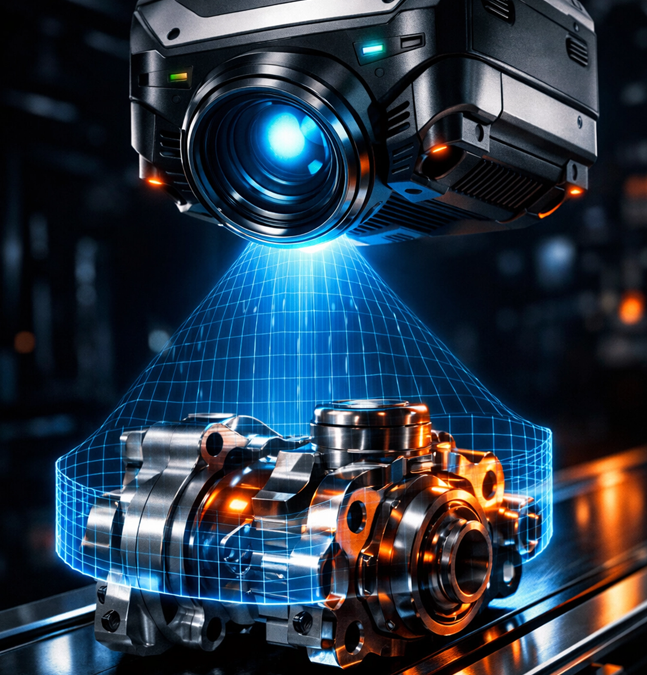
Vision and inspection sensors are among the most powerful tools in factory automation, yet they are often the largest contributors to “ghost” delays. A vision system does more than simply detect a part—it captures an image, filters noise, identifies patterns, and makes a logic-based decision.
Research indicates that complex vision inspections can add between 5 and 10 seconds per part in high-detail environments. This can create a bottleneck that often goes unnoticed because the robot is technically “working” while waiting for a pass/fail signal.
If your vision system is integrated into a synchronous process—where the robot cannot move until it receives that data—your cycle time is effectively tied to the sensor’s processing speed.
To address this, many engineers shift toward asynchronous processing. This approach captures the image at one station and processes it as the part moves to the next, rather than forcing the entire line to pause.
Without this type of strategic integration, even the fastest robot can be slowed by the very sensors designed to ensure quality.
Balancing Accuracy with Output Behavior
Output behavior refers to how a sensor communicates its findings to the PLC or controller. Most industrial sensors use either discrete outputs (on/off) or digital protocols such as IO-Link or Ethernet/IP. Each method impacts how quickly your system can respond to new information.
Standard discrete outputs are fast but provide limited data. In contrast, digital protocols deliver richer information—such as temperature, signal strength, and diagnostics—but require more bandwidth and processing overhead. If your network is saturated with diagnostic data you’re not actively using, you may be introducing “jitter” into your control loop.
Jitter refers to variation in timing between consecutive signals. If a sensor signal reaches the PLC at 5 ms during one cycle and 15 ms during the next, the system must be programmed to account for the worst-case scenario. This “padding” of cycle time helps ensure reliability, but it can also limit the maximum achievable speed of the line.
The Synchronization Challenge in IIoT
In modern logistics automation, sensors are no longer isolated components. They are part of a larger Industrial IoT (IIoT) ecosystem where data is shared across edge devices and cloud platforms. This level of connectivity requires precise timing synchronization, often handled by protocols like Time-Sensitive Networking (TSN) or the Precision Time Protocol (IEEE 1588).
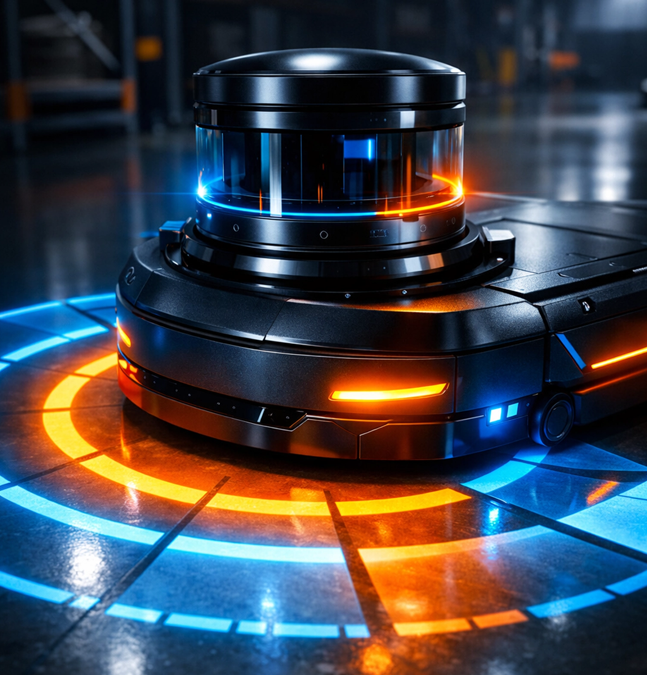
When sensors must communicate with multiple systems simultaneously, the underlying network architecture adds latency. If a LiDAR sensor on an Automated Guided Vehicle (AGV) must send safety data to a local controller and telemetry data to a cloud-based fleet manager, the processing load increases.
If the synchronization isn't perfectly tuned, the AGV may experience "micro-stuttering." This is when the vehicle slows down for a fraction of a second because it is waiting for a data packet to be confirmed. You might not notice it by watching the machine, but your daily output numbers will reflect the loss.
Navigating the Speed Paradox
There is a counterintuitive reality in automation known as the speed paradox. While it may be tempting to push sensors and robots to their maximum rated speeds, doing so can often result in lower overall productivity. Research shows that automation cells operating at 90% of their maximum speed can achieve up to 40% longer mean time between failures (MTBF) compared to those running at 100%.
Operating at the absolute limit increases vibration, heat, and electrical noise. For sensors, this can lead to a higher likelihood of false trips or signal interference. When a sensor triggers a false stop, the time lost restarting the line can far outweigh the milliseconds gained by increasing conveyor speed.
Studies of audited automation cells have found that in nearly 70% of cases, the robot is not the primary bottleneck. Instead, delays are often caused by sensor-dependent processes, such as conveyor synchronization or fixed-duration machine cycles. By prioritizing uptime and stability over raw speed, you can ultimately produce more parts over time.
How Environmental Factors Create Latency
Sensors do not operate in a vacuum. The conditions within your facility—dust, ambient light, temperature fluctuations, and humidity—directly influence how quickly a sensor can interpret what it detects.
For example, an optical sensor in a dusty environment may require higher gain settings or multiple sampling passes to distinguish a part from airborne particulates. This is often referred to as “retry” logic. If the sensor cannot obtain a clean reading on the first pass, it samples again. While this occurs in microseconds, repeated retries for every part can gradually increase cycle time.
Using ruggedized sensors designed for industrial environments can help reduce these delays. These sensors leverage advanced filtering algorithms to minimize noise and dust interference, improving the likelihood of obtaining an accurate reading on the first pass.
Optimizing Integration for Maximum Throughput
To prevent sensors from becoming a bottleneck, integration must be considered early in the design phase. This includes selecting the right sensor technology based on the speed and performance requirements of the application.
- Prioritize Local Processing: Use sensors capable of performing logic internally. If a sensor can determine a pass/fail outcome on its own—rather than sending raw data to a PLC—you can reduce network traffic and improve response time.
- Use Buffer Zones: Instead of triggering an immediate hard stop, consider multi-zone sensing technologies, such as LiDAR, to establish graduated “warning zones.” This allows the system to slow down rather than stop abruptly, helping preserve momentum and overall cycle efficiency.
- Audit Your Network: Ensure communication protocols are properly optimized. For example, if you are using IO-Link, verify that cycle times in the master configuration are aligned with the physical requirements of the application.
Choosing the right partner is just as important as selecting the right hardware. At Hokuyo USA, we provide the technical resources and whitepapers needed to support informed decisions around sensor architecture.
Making Every Millisecond Count
Efficiency in automation is rarely the result of a single major change—it comes from identifying the many small areas where time is being lost. Sensors are often a primary source of these micro-losses because their impact can be subtle and difficult to detect.
By selecting sensors with faster internal processing, optimizing data communication, and accounting for the “speed paradox,” you can reclaim lost cycle time. When sensors operate efficiently, the entire system runs with greater consistency and flow.
Are you noticing unexplained slowdowns in your automation cells? Our team of experts can help evaluate your sensing environment and identify solutions tailored to your application.
Have questions about optimizing sensor response times? Connect with our team or explore our case studies to see how we’ve helped organizations improve performance and streamline operations.