
 Factory Automation
 Logistics Automation
 Process Automation
 Crane Collision Avoidance
 LiDAR Sensors
 Safety Laser Scanners
 Optical Data Transmission
 Hot Metal Detectors
 Laser Distance Sensor
 Blog
Blog Whitepapers
 Case Studies
 Infographics
Unplanned downtime rarely begins with catastrophic equipment failure. More often, it starts with small interruptions: an AGV waiting for a blocked aisle, a robotic cell paused for an unnecessary safety stop, or material that isn't where the machine expects it to be.
The hidden cost is not just lost production time. It is the chain reaction that follows when equipment hesitates, waits, or stops because it lacks clear information about its surroundings. Missed handoffs, delayed shipments, reduced Overall Equipment Effectiveness (OEE), and added operator intervention all begin with moments of uncertainty.
Modern manufacturing systems rely on continuous visibility into their environment. When machines lose environmental perception—whether because they cannot accurately detect people, products, vehicles, or obstacles—production slows, safety systems intervene, and downtime follows.
That is where this conversation begins. In Manufacturing, Fabrication, and Industrial Operations, machines often stop not because they are broken, but because they do not know what to do next.
Manufacturing: Protecting OEE and Cycle Time
In high-speed manufacturing: covering sectors like automotive, electronics, medical devices, food & beverage, and packaging: success is measured in seconds. A small pause at one robotic cell, conveyor transfer, or AGV route can ripple across upstream and downstream equipment, reducing throughput long before anyone calls it a major failure.
The issue is often not mechanical breakdown. It is loss of machine visibility. When a system cannot reliably detect a person near a workcell, confirm that a pallet is clear of a transfer point, or understand whether an aisle is blocked, it defaults to caution. That caution protects people, however, it also creates waiting.
Improving Awareness on the Line
Safety laser scanners help machines monitor the spaces around them in real time. When a robotic cell stops unexpectedly, the operational consequence is rarely limited to that one station. Parts accumulate, operators intervene, and cycle time drifts because fixed guarding or overly simple detection cannot distinguish between a true hazard and a manageable approach.
Intelligent safety sensing adds context. Hokuyo's UAM-05LP safety laser scanner enables configurable warning and protection zones, allowing equipment to slow down before reaching a full stop. The outcome is safer interaction with less nuisance downtime and fewer manual resets.
Automated vehicle movement follows the same pattern. AGVs stopping unexpectedly can create congestion throughout a production line, forcing upstream and downstream equipment to wait. In many facilities, those interruptions start when vehicles have limited operational visibility in tight corridors, at intersections, or near people and staged materials. Reliable 2D LiDAR scanners help automated vehicles maintain environmental understanding of their surroundings, improving navigation while reducing unnecessary interruptions.
For more complex paths and dynamic environments, 3D LiDAR sensing adds depth perception that helps AMRs interpret obstacles more completely. Environmental intelligence leads to confidence. Confidence keeps material moving.
Fabrication: Navigating Harsh Environments and Material Flow
Fabrication operations: including sheet metal, structural steel, torch cutting, welding cells, plasma tables, and plate handling: deal with a different rhythm. Steel is moving. Sparks are flying. Overhead cranes are carrying long loads across bays. Material is being staged, cut, turned, welded, and transferred from one process to the next. In that kind of environment, downtime often begins at the exact moment a machine loses confidence in where something is.
The operational consequence is immediate. If a crane pauses because it cannot confirm spacing, plate handling slows. If a staging area is cluttered or partially blocked, cutting and welding cells wait for material. If position feedback becomes unreliable in smoke, dust, steam, or glare, operators step in manually and flow breaks down across the bay.
Keeping Steel Moving Safely
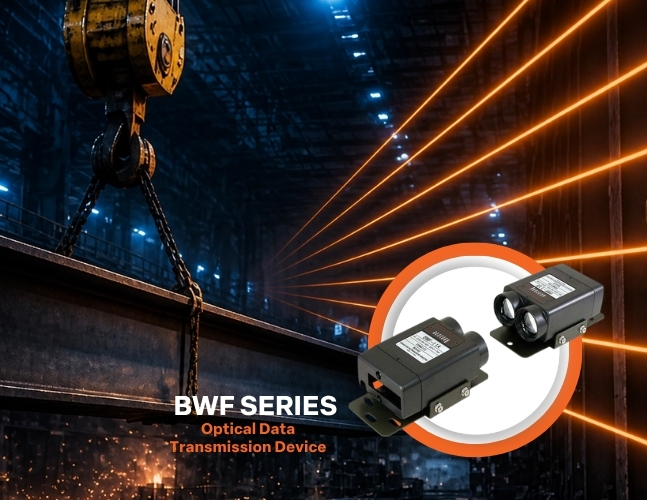
Crane and material handling systems need accurate real-time sensing, not just rugged hardware. When distance information is inconsistent or visibility drops around moving equipment, hesitation follows. Positioning slows, collision risk increases, and operators are more likely to step in manually because harsh fabrication conditions interfere with standard sensing and large moving loads leave little margin for uncertainty.
That is where crane collision avoidance systems and long-range sensing help. For example, the BWF Series supports reliable distance measurement for overhead applications, including environments with smoke or steam. The outcome is more confident crane movement, safer spacing, and fewer delays at handoff points.
Fabrication also depends on reliable positioning around outdoor yards, dusty transfer zones, and moving carriages. In these cases, outdoor-rated LiDAR helps filter environmental noise so equipment can continue operating with better environmental understanding. In addition, optical data transmission helps rotating or moving machinery share signals without the cable fatigue that often causes intermittent stoppages. When machines can maintain reliable detection, they can keep moving.
Industrial Operations: Reliability Across the Supply Chain
Industrial operations extend far beyond warehouses. They include ports, aggregate sites, heavy equipment yards, process manufacturing plants, utilities, automated distribution centers, packaging lines, and logistics hubs. Across all of these environments, downtime often starts with the same issue: equipment encounters uncertainty and responds by slowing down or stopping.
The consequences may look different depending on the site. At a port, a vehicle pause can delay container movement. In aggregate or heavy equipment environments, dust and traffic complicate equipment positioning. In process manufacturing and utilities, an unexpected stop at a transfer point can disrupt tightly timed flow. In automated distribution and packaging, a blocked lane or poorly monitored intersection can back up an entire system within minutes.
Expanding Awareness Across Industrial Sites
Reliable navigation depends on continuous real-time feedback. When visibility is limited around vehicles, conveyors, loading zones, or pedestrian crossings, equipment slows down, emergency stops increase, and throughput drops. These environments move quickly, and without strong contextual sensing, even small uncertainties can spread across the operation.
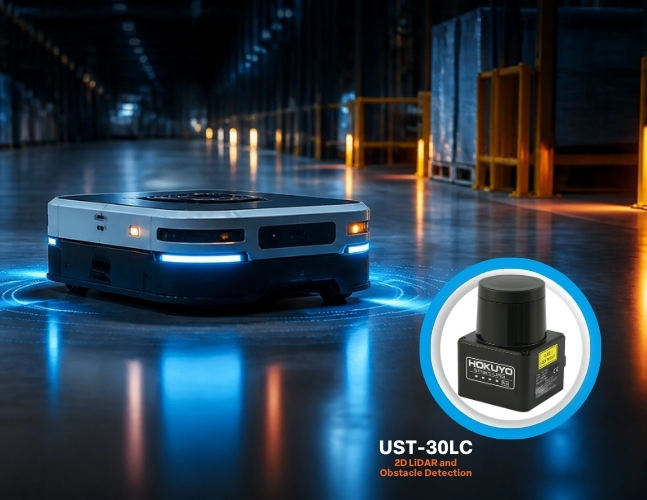
That is why LiDAR sensors and safety laser scanners play such an important role. A platform such as the UST series helps AGVs and other automated vehicles detect obstacles early and navigate with greater consistency. Safety laser scanners also help protect workers at loading docks, conveyor junctions, and machine approach zones while reducing unnecessary stops caused by less precise detection.
Machines do not stop because they are fragile. They stop because they lack enough operational visibility to proceed with confidence. When industrial systems can perceive their environment clearly, flow becomes easier to maintain.
As automation becomes more intelligent, manufacturers are moving beyond simply reacting to interruptions. Modern sensing technologies help equipment interpret changing conditions in real time, allowing systems to adjust before small disruptions grow into larger production delays. This shift from reactive responses to proactive operational awareness is becoming an important part of improving uptime across manufacturing, fabrication, and industrial environments.
Turning Insight into Impact
Downtime rarely results from a single catastrophic failure. More often, it begins with small moments of uncertainty—equipment waiting for confirmation, vehicles navigating around unexpected obstacles, or operators responding to unnecessary stops.
By improving how machines perceive and respond to their environment, manufacturers, fabricators, and industrial operators can reduce interruptions, improve throughput, and build more resilient automation systems. That is how operational insight becomes a measurable impact.
The bigger shift is simple. Machines do not stop because they are broken. They stop because they do not know what to do next. We help provide the perception that leads to confidence, the confidence that leads to flow, and the flow that reduces downtime.
Have questions about reducing downtime in your facility? Let's talk about your specific application.