
 Factory Automation
 Logistics Automation
 Process Automation
 Crane Collision Avoidance
 LiDAR Sensors
 Safety Laser Scanners
 Optical Data Transmission
 Hot Metal Detectors
 Laser Distance Sensor
 Blog
Blog Whitepapers
 Case Studies
 Infographics
Industrial environments are moving faster than ever. Cranes lift heavier loads, warehouses run tighter schedules, and ports handle growing volumes of cargo every day. In these settings, laser distance sensors play a critical role in keeping people safe and operations efficient.
Unlike traditional sensors that rely on physical contact or simple detection, laser distance sensors measure precise distances in real time. They help machines understand exactly where objects, loads, and people are, before a collision happens. This accuracy reduces downtime, prevents damage, and improves overall throughput.
Let's explore how laser distance sensors improve safety and efficiency across cranes, warehouses, and ports. We’ll look at how they work, where they’re used, and why they’ve become a foundational technology in modern automation.
Why Industrial Environments Demand Precision Sensing
Growing Automation, Growing Risk
As automation expands, machines operate closer to people, equipment, and valuable goods. Small positioning errors can cause:
- Load collisions
- Equipment damage
- Product loss
- Safety incidents
Laser distance sensors help close this gap by delivering continuous, accurate distance measurements, even in dynamic environments.
From Reactive to Predictive Safety
Traditional safety systems often react after contact. Laser distance sensors shift safety upstream by detecting distance changes early, allowing systems to slow, stop, or adjust before impact.
Facilities that invest in distance sensing early often reduce incident-related downtime more than those relying solely on mechanical safety devices.
How Laser Distance Sensors Work
Laser distance sensors emit a laser beam toward a target and measure the time it takes for the reflection to return. This time-of-flight calculation determines the exact distance to an object. Unlike cameras or ultrasonic sensors, laser distance sensors are not affected by ambient lighting or surface texture.
Advantages
- Non-contact measurement
- High accuracy over long distances
- Reliable performance in dust, vibration, and low light
- Fast response for real-time control
Improving Crane Safety and Load Control
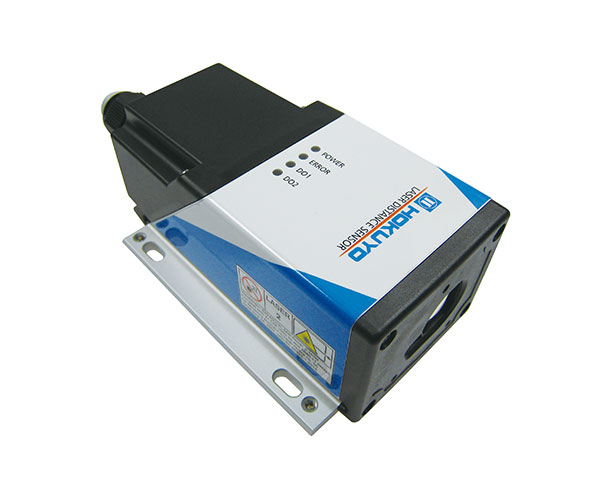
In overhead and gantry cranes, precise positioning is critical. This data allows cranes to slow automatically as they approach limits or obstacles. Laser distance sensors monitor:
- Trolley position
- Hook height
- Distance to end stops
- Clearance from structures or loads
Enhancing Load Stability
Laser distance sensors help maintain safe lifting heights and consistent positioning, reducing sway and misalignment.
Increasing Warehouse Efficiency and Safety
Smarter Material Flow
In warehouses, laser distance sensors are used on:
- Conveyors
- Automated storage and retrieval systems (AS/RS)
- Dock doors
- Pallet positioning systems
They ensure products are correctly spaced, aligned, and transferred - without jams or misfeeds.
Protecting Workers and Equipment
Distance sensors detect forklifts, pallets, or people entering restricted zones, triggering slowdowns or stops before contact occurs.
Warehouses that use distance sensors for spacing control often see fewer conveyor stoppages and less product damage.
Optimizing Port Operations and Yard Equipment
Handling Large-Scale Assets Safely
Ports and terminals rely on laser distance sensors to manage:
- Container cranes
- Ship-to-shore operations
- Automated stacking cranes
- Yard vehicles
These environments demand long-range, rugged sensors capable of operating in rain, fog, salt air, and vibration.
Improving Throughput Without Sacrificing Safety
By providing accurate distance data, sensors allow cranes and vehicles to move faster while maintaining safe separation from containers, ships, and infrastructure.
Key Benefits Across Cranes, Warehouses, and Ports
- Improved Safety
Laser distance sensors reduce collisions by detecting distance changes early and consistently. - Higher Operational Efficiency
Accurate positioning leads to faster cycles, smoother motion, and fewer interruptions. - Reduced Downtime
Early detection prevents equipment damage that can halt operations for hours—or days. - Better Automation Control
Sensors integrate directly with PLCs and control systems for precise motion control.
Comparing Laser Distance Sensors to Traditional Technologies
| Feature | Laser Distance Sensors | Mechanical Switches | Ultrasonic Sensors |
|---|---|---|---|
| Measurement Type | Non-contact | Contact | Non-contact |
| Accuracy | High | Low | Medium |
| Range | Long | Very short | Short |
| Environmental Resistance | High | Medium | Low |
| Maintenance | Minimal | Frequent | Moderate |
ROI and Long-Term Operational Value
Laser distance sensors are not just devices for safer operations - they are productivity tools. Over time, facilities see:
- Fewer accidents and near-misses
- Lower maintenance costs
- Higher throughput
- Improved operator confidence
- Stronger compliance with safety standards
As cranes lift heavier loads, warehouses move faster, and ports handle greater volumes, precision becomes non-negotiable. Laser distance sensors provide the accuracy, reliability, and speed modern industrial operations demand.
By delivering real-time distance data without physical contact, these sensors protect people, equipment, and goods - while keeping operations moving efficiently. From crane positioning to warehouse flow control and port automation, laser distance sensors have become a cornerstone of safe, scalable automation.
If your operation depends on precise movement and reliable safety, investing in laser distance sensing isn’t just smart - it’s essential.
FAQs
- What are laser distance sensors used for?
They measure precise distances for positioning, collision prevention, and automation control.
- Can laser distance sensors work in dusty or outdoor environments?
Yes. Industrial models are designed for dust, vibration, and weather exposure.
- Are laser distance sensors better than ultrasonic sensors?
Yes, especially for long-range, high-accuracy applications.
- Do laser distance sensors require physical contact?
No. They operate entirely through non-contact measurement.
- Can they integrate with existing automation systems?
Yes. They connect directly to PLCs and industrial controllers.
Ready to improve safety and efficiency?
Explore how laser distance sensors can elevate your automation strategy.